avasa [uh-VAH-suh] Sanskrit: the right moment
Eyes that listen.
AR glasses and a companion app that turn speech, sound and direction into calm visual cues, so Deaf and Hard of Hearing individuals can stay in the conversation, not just near it.
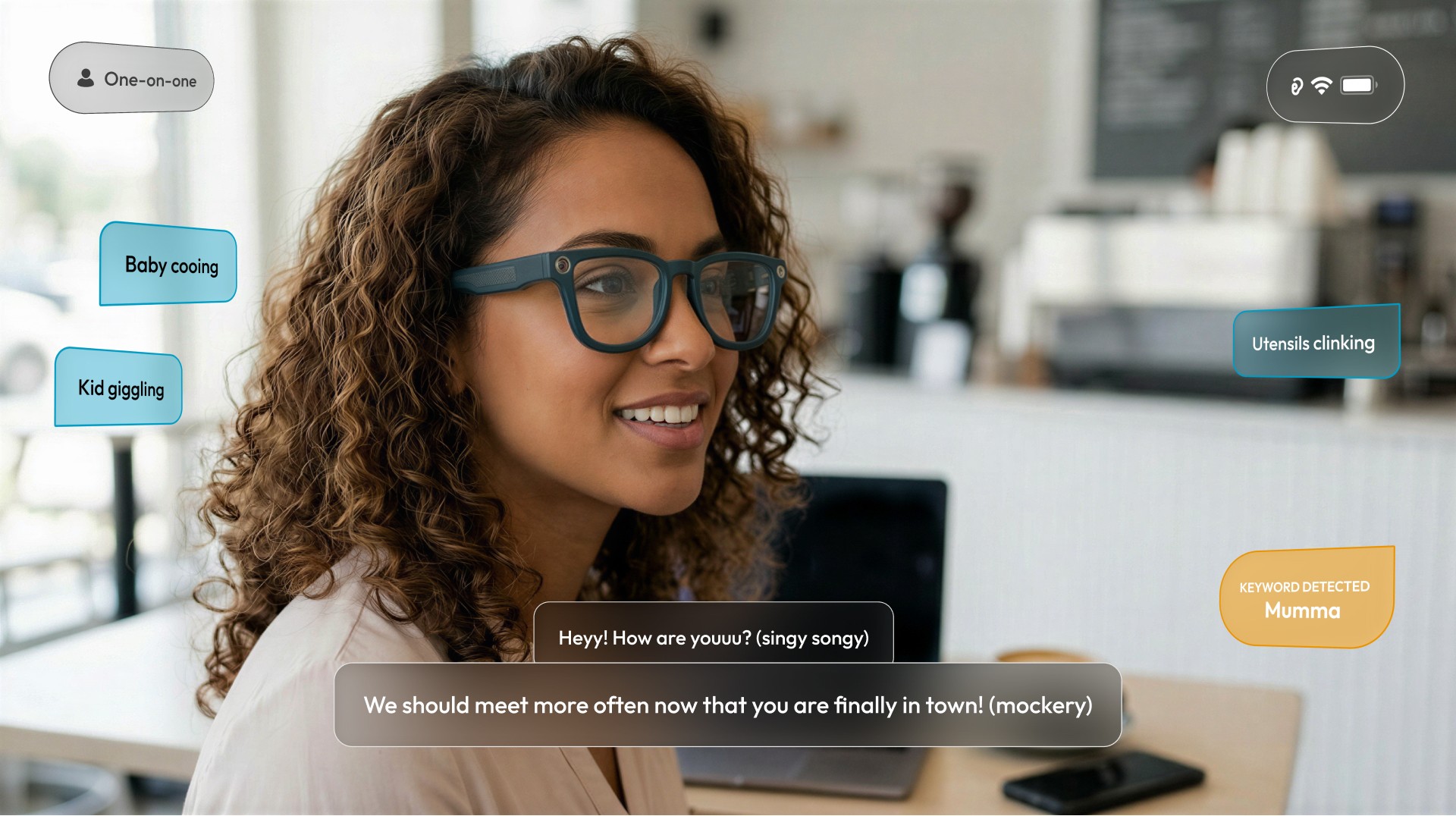 live captions
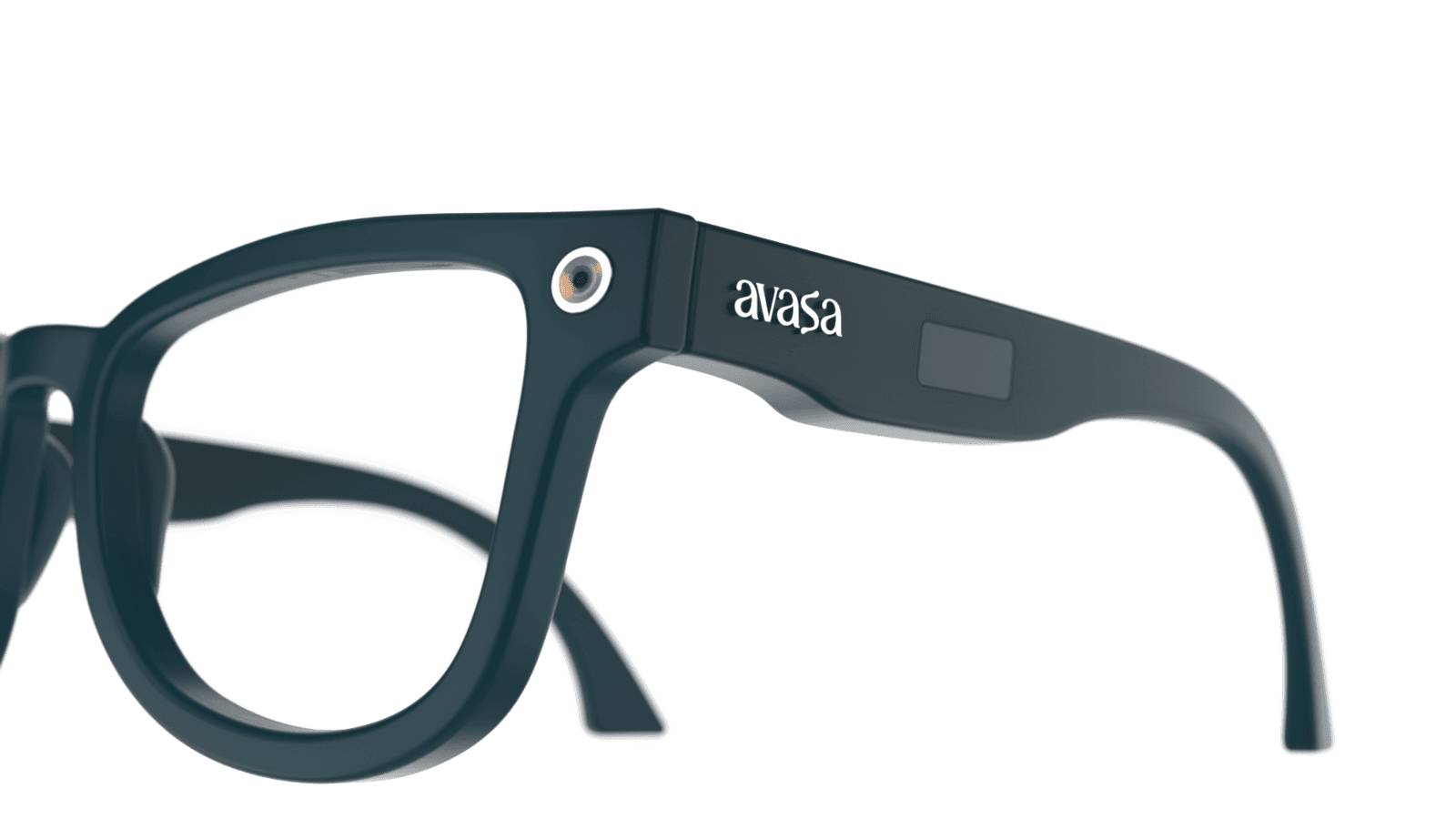
the 30-second version
Conversations break down daily for 42% of the Deaf and Hard of Hearing participants I surveyed. Tools caption words, not context.
AR glasses that show who is speaking and from where, flag sounds that matter, and step back when they don't.
Solo thesis: 58 research voices, system and spatial UX, app UI, electronics. Physical form with Anjali Kalamkar.
94% average rating from 7 Deaf and Hard of Hearing testers across 5 real-life scenarios.
how the concept narrowed
- IdeaA general accessibility tool
- ShiftFocus on communication barriers
- RefineReal breakdown moments: social and safety
- PivotAR as a spatial communication layer
- FinalGlasses + companion app ecosystem
Breakdowns don't stop the conversation.
They slowly remove you from it.
Hearing aids amplify and captions transcribe. Real conversations are fast, overlapping and spatial, and most tools solve one slice at a time.
Sound is how we map the world
Six things a hearing person picks up without trying.
- Your name, called from behindbehind you
- A car horn on your leftleft
- Two friends talking at onceacross the table
- A gate change announcementoverhead
- Someone at the doornext room
- A sarcastic tonein the voice
How hearing loss is usually framed
Not one medical problem. A system of breakdowns.
Reaching a community that is hard to reach
Mixed methods, with the weight on lived experience: not just how often communication fails, but why and how.
How 3 responses became 44
- 3-5responses from my personal network. Not enough.
- 300+organizations, universities, schools and Deaf and Hard of Hearing groups contacted
- 20organizations in 10 states shared the survey link and QR code
- 44validated responses, a strong sample for a niche, hard-to-reach group
20 organizations in 10 states shared the survey. Hover a teal state to see who.
How often conversations with hearing people break down
Share of participants
- Daily
- Once or more a week
- Less often
What breaks a moment, and what rescues it
Makes it worse
Helps most
Every fix depends on Deaf and Hard of Hearing people changing their behaviour. That was the gap.
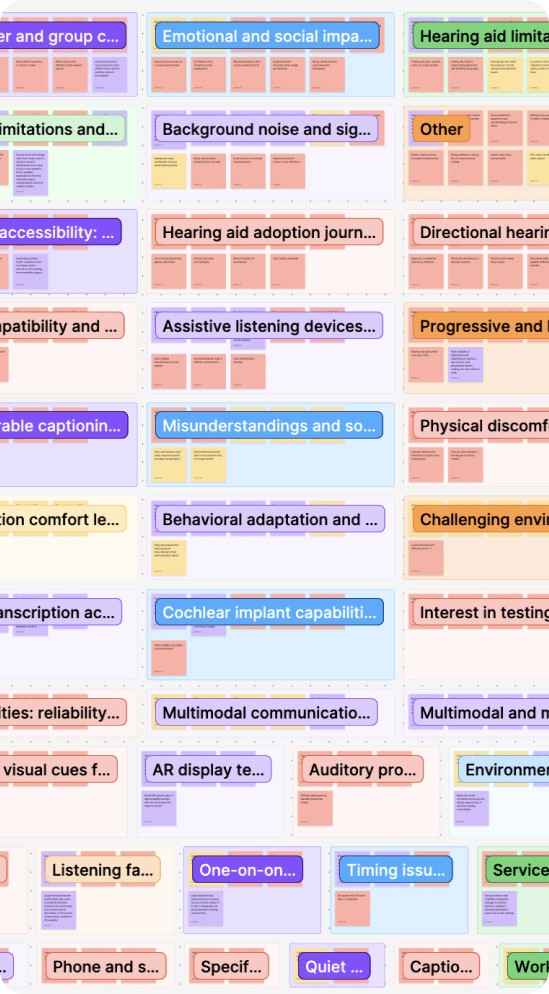 my affinity map, FigJam
Interviews, run the accessible way
- In person in Savannah with SCAD-provided interpreters
- Remote on Zoom with live captions on
- Structure bent to each participant's comfort, not a rigid script
- Each walked through one real breakdown, step by step
What experts told me
“The biggest gap is real-time conversational reciprocity, not access to information.”
500 data points, 8 patterns
Affinity mapping in FigJam. Tap a note.
A day in two lives
Deaf student · hearing aids + classroom captions
the reframe
How might we help Deaf and Hard of Hearing individuals understand and take part in noisy, multi-speaker, fast-changing conversations without adding cognitive load?
Not one feature. Six modes that know the moment.
Avasa reads the situation and changes how much it shows. In a quiet one-on-one it barely appears; in an emergency it takes over.
Every choice asks: does this add to the burden or remove it?
Show information when it is relevant, not before or after.
Interrupt only when it absolutely matters.
Conversation modeOne person, full attention.
- Speech to text for the person in front of you
- Speaker tags with direction
- Tap the left temple: repeat the last sentence
- Minimal overlay, eye contact stays
Why glasses, not a phone
- Looking at a phone breaks social presence→Hands-free overlay in your view
- Communication depends on where things are→Context stays in your field of view
- Group talk is chaotic→Directional, speaker-aware captions
- Safety cues get missed→Ambient detection and visual alerts
Building the glasses
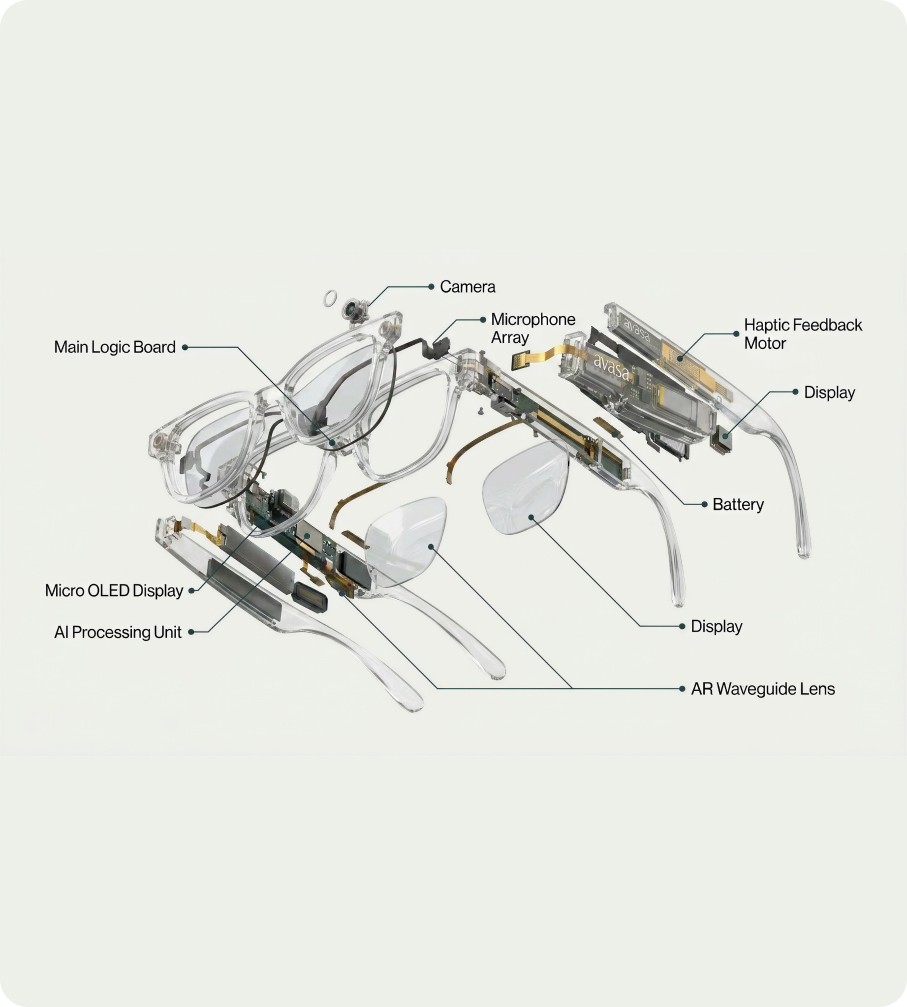
Physical form designed with industrial designer Anjali Kalamkar. Interaction, component placement and electronics were mine.
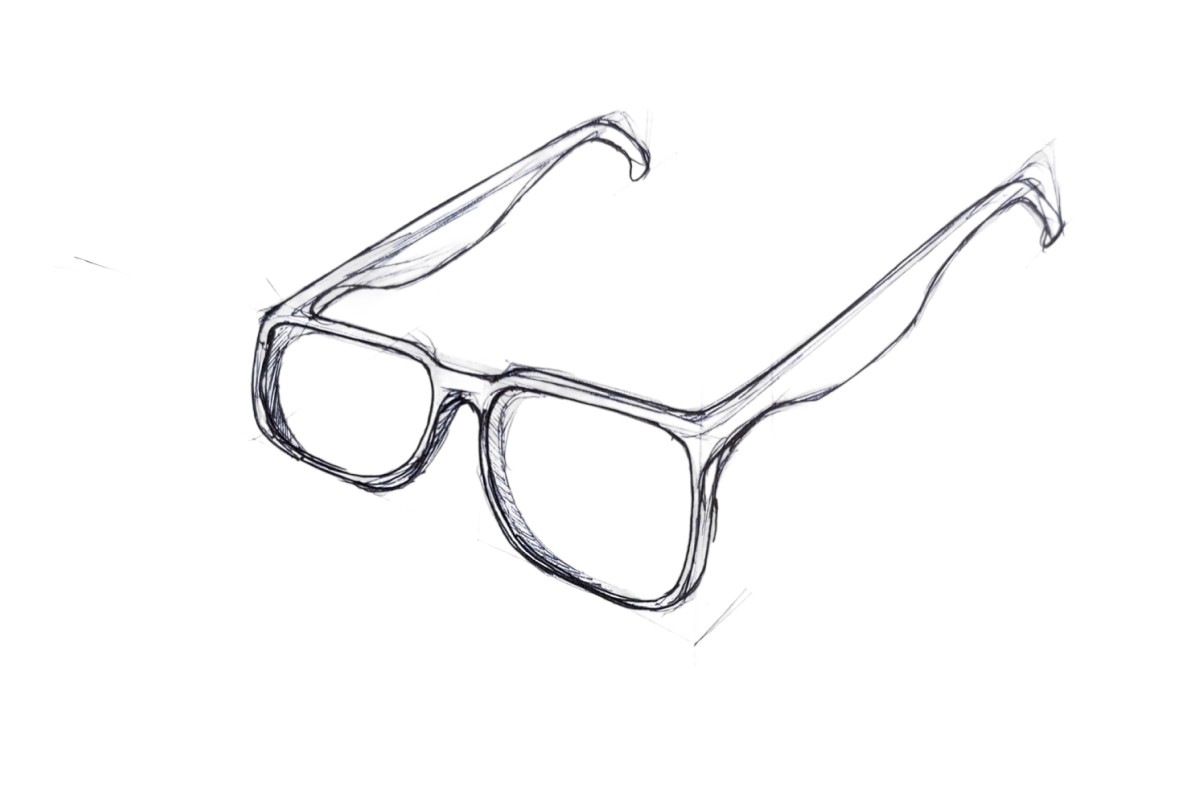 01 / 07
Form, button placement and everyday wearability on paper first.
 Final renders
how you use it
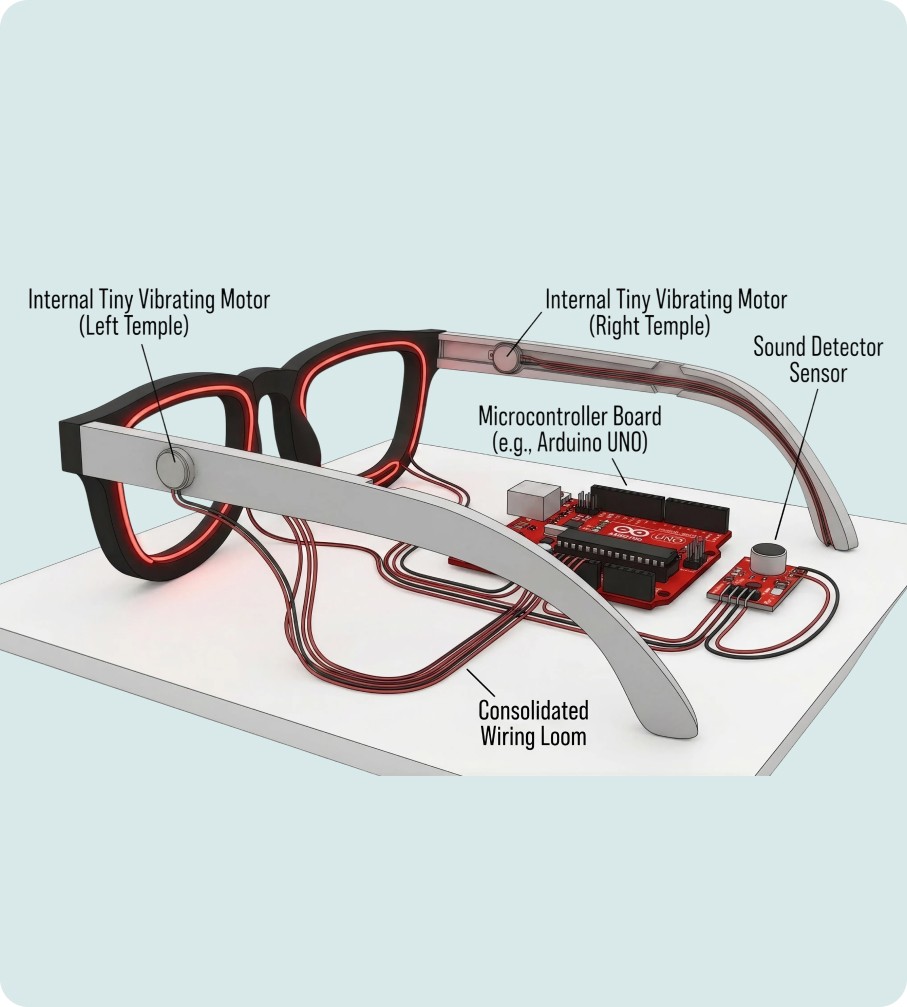
Two temples, two jobs. No phone, no voice.
Left temple

Right temple
Designed for eyes-busy, hands-free moments: you never look away from the person you're talking to.
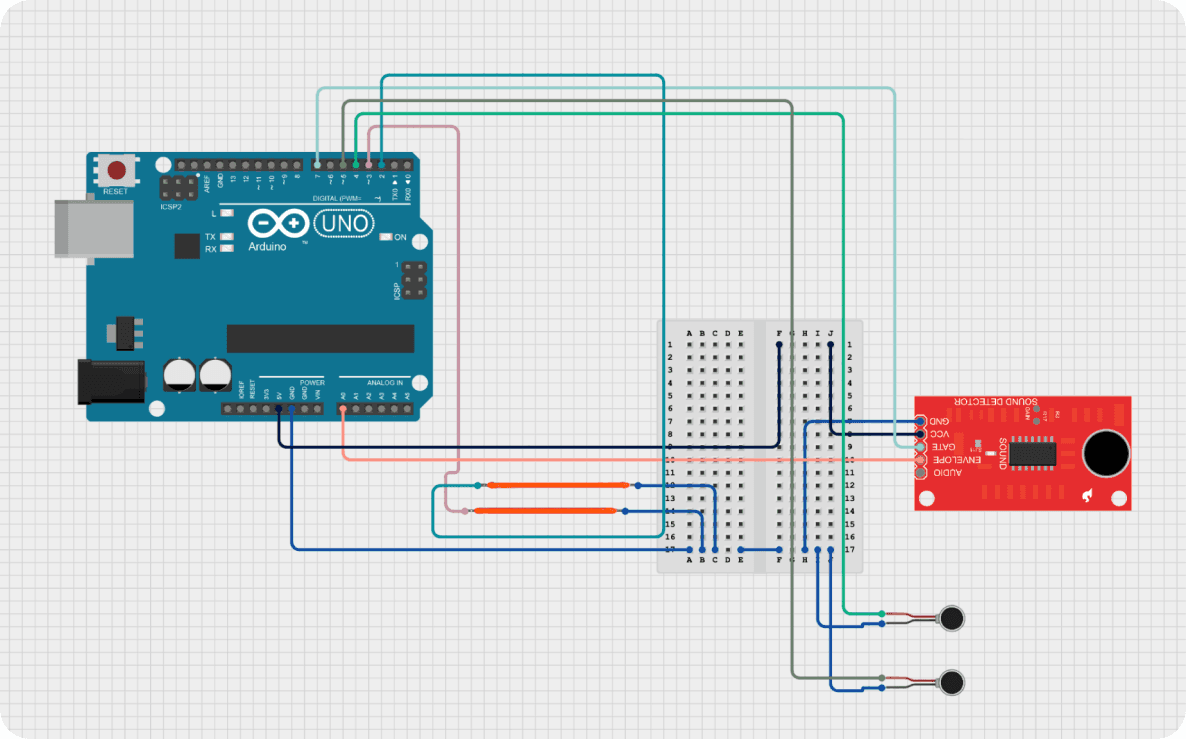
The emergency alert, wired up
A working electronics prototype to test what an alert should feel like.
Calm in the glasses, control in the phone
The glasses show only what matters right now. The companion app is where you set what matters.
the name and the mark

- avasa [uh-VAH-suh]
- From the Sanskrit avasara: the right moment, a favorable opportunity. That is the whole brief: speak up at the right moment, stay quiet otherwise.
The s in avasa is drawn as one continuous, fluid stroke.
Splash. Capture every moment that matters.
Two rounds, one honest correction
Round 1 with 11 hearing participants reshaped the visuals. Round 2 put the result in front of 7 Deaf and Hard of Hearing participants: 5 scenarios, 40 Likert questions.
Round 1 · what I assumed vs what I learned (tap a card)
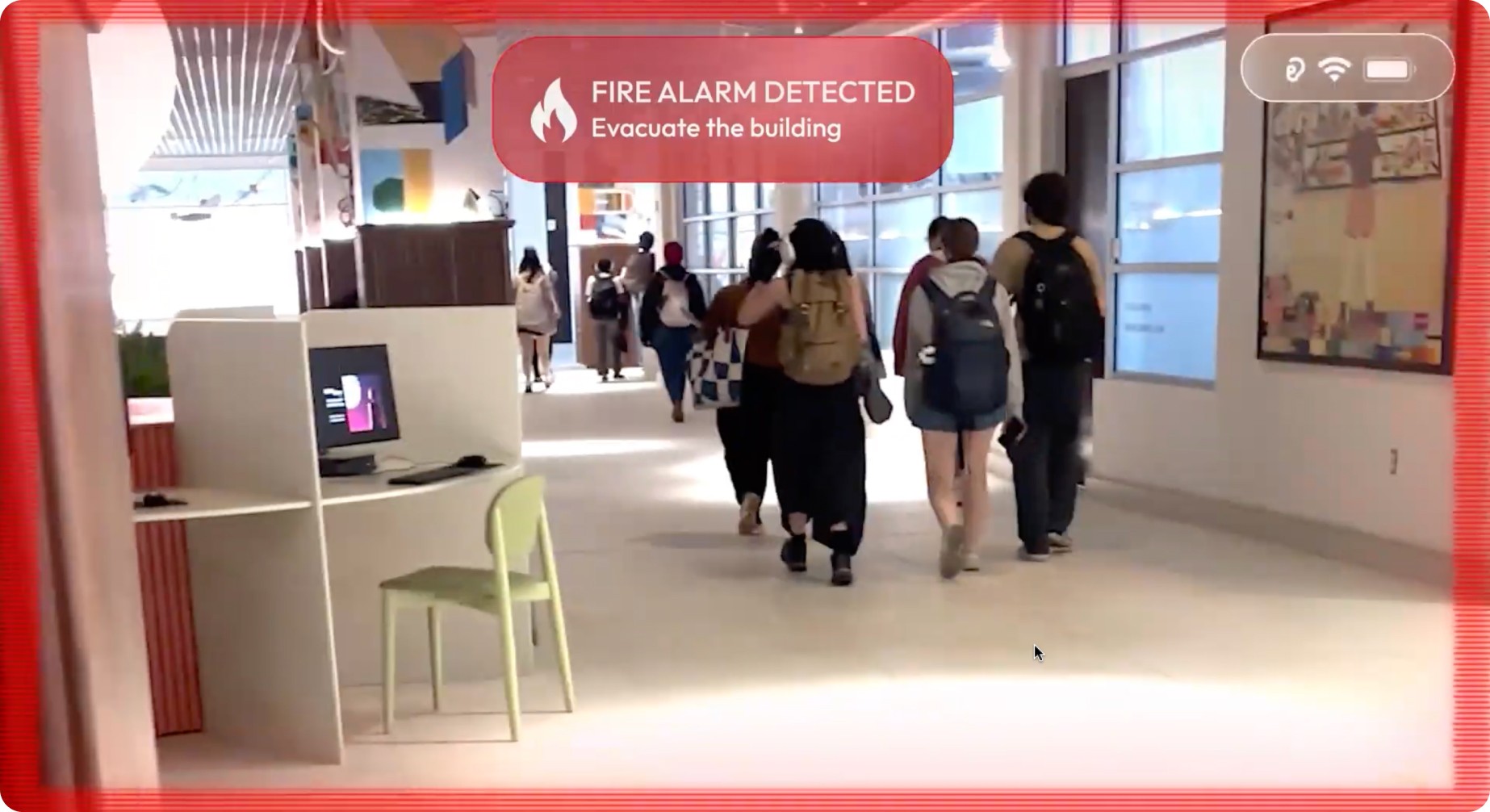 Scenario 5
- Alerts felt immediate and trustworthy
- Multimodal feedback made people feel safer
- Near-universal acceptance
Access is not participation
People are rarely excluded because information doesn't exist. It arrives too late, without context, or costs too much effort.
Design for moments, not tasks. Breakdowns happen in fast, unpredictable situations, not in neat feature lists.
Visible when needed, invisible otherwise. Participants wanted support that is always there and never draws attention.
Privacy is part of accessibility. On-device first, minimal data, and the user decides what is kept.
Still in progress: what testing asked for next
- Captions that hold up on bright outdoor scenes
- Caption speed and contrast in one-on-one talk
- A clear battery and charging workflow
- Less split attention while driving


Thank you
- Anjali KalamkarPhysical prototype design
- Kiran BandaUsability testing support
- Prof. Byeong Cheol (BC) HwangCommittee chair
- Prof. Clark Delashmet · Prof. Jenny MischelCommittee members
- 58 participants and expertswho shared their time and their stories